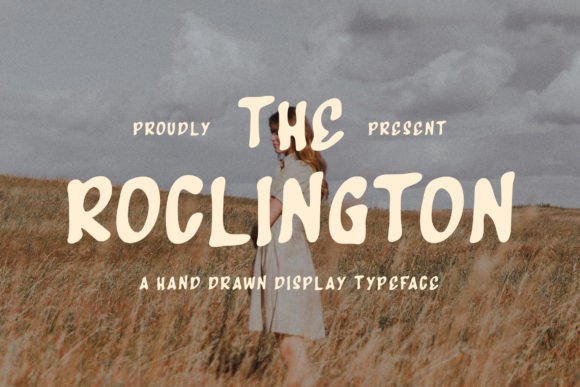
The Roclington: A Hand-Drawn Display Typeface for Modern Design
In the ever-evolving world of typography, where digital tools and creative expression intersect, The Roclington stands out as a distinctive hand-drawn display typeface. Designed for versatility and visual impact, this font is more than just a stylistic choice—it's a reflection of current design trends and the growing demand for authenticity in visual communication. Whether used on complex backgrounds or as a bold headline, The Roclington offers a unique blend of artistry and functionality that resonates with professionals across industries.
As businesses and creators seek to differentiate themselves in a saturated market, the importance of typography has never been greater. A well-chosen font can elevate a brand’s identity, convey a message with clarity, and create an emotional connection with the audience. The Roclington, with its organic strokes and expressive character, meets these needs by offering a fresh alternative to the rigid, machine-generated fonts that dominate many digital spaces.
What Makes The Roclington Unique?
The Roclington is not just another typeface; it is a carefully crafted design that combines the imperfections of hand-drawn elements with the precision required for modern use. Each letterform carries a sense of individuality, making it ideal for projects that require a personal touch. This aesthetic aligns with broader industry trends that favor human-centric design, where the warmth of handmade elements contrasts with the cold efficiency of digital production.
Unlike many typefaces that aim for uniformity, The Roclington embraces variation. Its subtle irregularities give it a dynamic quality, making it feel more alive and engaging. This characteristic is particularly appealing in an era where audiences are increasingly drawn to content that feels authentic and unfiltered. In a world dominated by algorithmic design, The Roclington serves as a reminder of the value of human creativity.
Relevance in the Broader Creative Landscape
The rise of The Roclington coincides with a shift in how designers and marketers approach visual storytelling. As brands strive to connect with their audiences on a deeper level, they are turning to typography that conveys emotion and personality. The Roclington fits perfectly into this narrative, offering a voice that is both professional and expressive.
This trend is especially evident in the marketing and branding sectors, where the use of custom fonts has become a key differentiator. Companies are no longer satisfied with generic typefaces; they seek fonts that reflect their brand’s identity and values. The Roclington, with its distinct character, allows for such differentiation, helping brands stand out in a crowded marketplace.
Moreover, the increasing popularity of social media and digital content creation has amplified the need for visually striking typography. Platforms like Instagram, TikTok, and Pinterest rely heavily on eye-catching visuals, and The Roclington provides a powerful tool for creating content that grabs attention. Its readability on screens, combined with its artistic flair, makes it a go-to choice for designers looking to make an impact.
Why People Are Paying Attention to The Roclington
The growing interest in The Roclington can be attributed to several factors, including its adaptability and aesthetic appeal. Unlike some display typefaces that are limited to specific uses, The Roclington is designed to work in a variety of contexts. Whether it's used in print, web design, or motion graphics, it maintains its visual integrity and impact.
Another reason for its popularity is the way it complements other design elements. Its fluid strokes and balanced proportions allow it to pair well with both serif and sans-serif fonts, making it a versatile addition to any designer’s toolkit. This flexibility is crucial in an industry where consistency and cohesiveness are paramount.
Additionally, The Roclington appeals to those who value craftsmanship and detail. In a time when automation and AI-driven design tools are becoming more prevalent, there is a renewed appreciation for handcrafted elements. The Roclington embodies this sentiment, offering a tangible connection to the creative process that many designers find inspiring.
Meeting Changing Needs and Preferences
The modern design landscape is shaped by evolving expectations and workflows. Professionals are no longer just concerned with aesthetics—they also prioritize usability, accessibility, and cross-platform compatibility. The Roclington addresses these concerns by maintaining readability at various sizes and ensuring legibility across different mediums.
This adaptability is particularly important in the context of responsive web design, where content must look good on devices of all sizes. The Roclington’s clean lines and structured forms ensure that it remains effective whether it's used in a mobile app, a website header, or a printed poster. This practicality makes it a valuable asset for designers working in fast-paced environments.
Furthermore, the increasing focus on inclusivity in design has led to a greater emphasis on fonts that are accessible to a wide range of users. The Roclington, with its clear letterforms and balanced spacing, supports this movement by providing a typeface that is both visually appealing and easy to read. This makes it a suitable choice for projects that aim to reach diverse audiences.
Practical Applications and Observations
From a practical standpoint, The Roclington has found its place in a variety of applications. It is frequently used in editorial design, where its expressive nature adds a sense of energy and dynamism to layouts. In advertising, it helps create headlines that command attention without overwhelming the reader. In branding, it serves as a strong visual anchor that reinforces a company’s identity.
One notable example of its use is in the fashion industry, where the font’s elegant yet bold style aligns with the aesthetic of high-end labels. It has also gained traction in the tech sector, where it is used to add a human touch to otherwise sterile interfaces. These examples highlight the font’s ability to bridge the gap between creativity and functionality.
Designers have also noted that The Roclington encourages experimentation. Its unique character invites creative exploration, allowing for variations in weight, spacing, and style. This openness is beneficial in a field where innovation is key, and where the ability to adapt to new challenges is essential.
Looking Ahead: The Future of Typography and The Roclington
As technology continues to advance, the role of typography in design will only become more significant. With the rise of augmented reality, virtual experiences, and interactive media, the need for adaptable and expressive fonts will grow. The Roclington, with its balance of artistry and practicality, is well-positioned to meet these future demands.
Moreover, as global design communities continue to collaborate and share ideas, the influence of hand-drawn and artisanal typefaces is likely to expand. The Roclington represents a shift towards more personalized and meaningful design, reflecting a broader cultural movement that values individuality and creativity.
In conclusion, The Roclington is more than just a typeface—it is a statement. It reflects the changing priorities of the design industry, where authenticity, adaptability, and emotional resonance are increasingly valued. For professionals seeking to make an impact, The Roclington offers a powerful tool that combines beauty with functionality, ensuring that their work stands out in a competitive and ever-changing landscape.